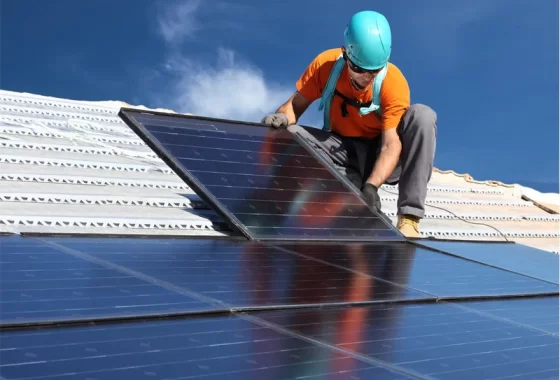
In 2026, the case for home solar panels Plymouth is stronger than it has ever been. As Britain’s Ocean City, Plymouth sits in a geographical “sweet spot” for renewable energy. With solar irradiance levels in Devon significantly higher than the UK average, Plymouth homeowners are uniquely positioned to turn the sun into a high-yielding financial asset.
As we navigate the energy landscape of early 2026, the combination of high grid electricity costs, lucrative export tariffs, and specialized local grants has turned solar from a “green luxury” into an essential tool for household economic security. This guide provides a deep dive into the costs, savings, and local factors that make solar panels a must-have for Plymouth residents this year.
Plymouth receives roughly 1,230 kWh/m² of solar irradiance annually, about 15% more than the national average. For a typical 4kW system on a south-facing roof in areas like Plymstock or Mannamead, this translates to an annual generation of approximately 3,800 to 4,200 kWh of clean electricity.
In real-world terms, this is enough to power an average 3-bedroom home almost entirely during the summer months and provide a significant offset during the winter. Modern N-type monocrystalline panels installed in 2026 are also far more efficient than older models, meaning they can generate more power from a smaller roof footprint, a vital consideration for the historic terraced housing common in Mutley and Stoke.
The true ROI of a Plymouth solar system comes from a two-pronged financial attack: reducing what you pay the grid and maximizing what the grid pays you.
In 2026, the energy price cap for standard variable tariffs remains high, with electricity rates sitting around 28p per kWh. By using your own solar energy for free, the average Plymouth family saves between £800 and £1,100 per year on their electricity bills.
The Smart Export Guarantee (SEG) has reached a peak of competitiveness in 2026. If your system is MCS-certified, you can sell surplus power back to the grid.
For a well-managed system, these export payments can add an extra £200 to £400 to your annual income, effectively shortening your “payback period” to just 6 to 8 years.
For many, the initial cost is the only barrier. In 2026, Plymouth City Council and national bodies offer several routes to help:
Plymouth City Council has been allocated a specific portion of the national Warm Homes: Local Grant. This fund provides up to £30,000 for whole-house energy upgrades, including solar panels. To qualify, your home must have an EPC rating of D, E, F, or G, and your household income must generally be £36,000 or less.
The Energy Company Obligation (ECO4) scheme has been extended to December 2026. This scheme focuses on vulnerable or low-income households. If you are in receipt of certain benefits, you may be eligible for a fully-funded solar installation. In Plymouth, the “Flex” route allows the council to nominate residents who may not receive benefits but still struggle with high energy costs.
PEC is a local, community-owned cooperative that provides impartial advice and support for home solar panels Plymouth. They often run group-buying schemes that can reduce the cost of installation by 20% to 30% by pooling the purchasing power of multiple neighborhoods.
Plymouth has a rich architectural history, which means roughly 20% of the city is subject to conservation rules. If you live in areas like The Barbican, Hoe, or Mannamead, you must consider:
In 2026, the combination of high-efficiency technology, the 0% VAT rate, and Plymouth’s exceptional sunshine levels makes solar the smartest investment for your home. By taking control of your energy generation, you aren’t just protecting yourself against future price hikes, you are actively contributing to Plymouth’s mission to be Net Zero by 2030.